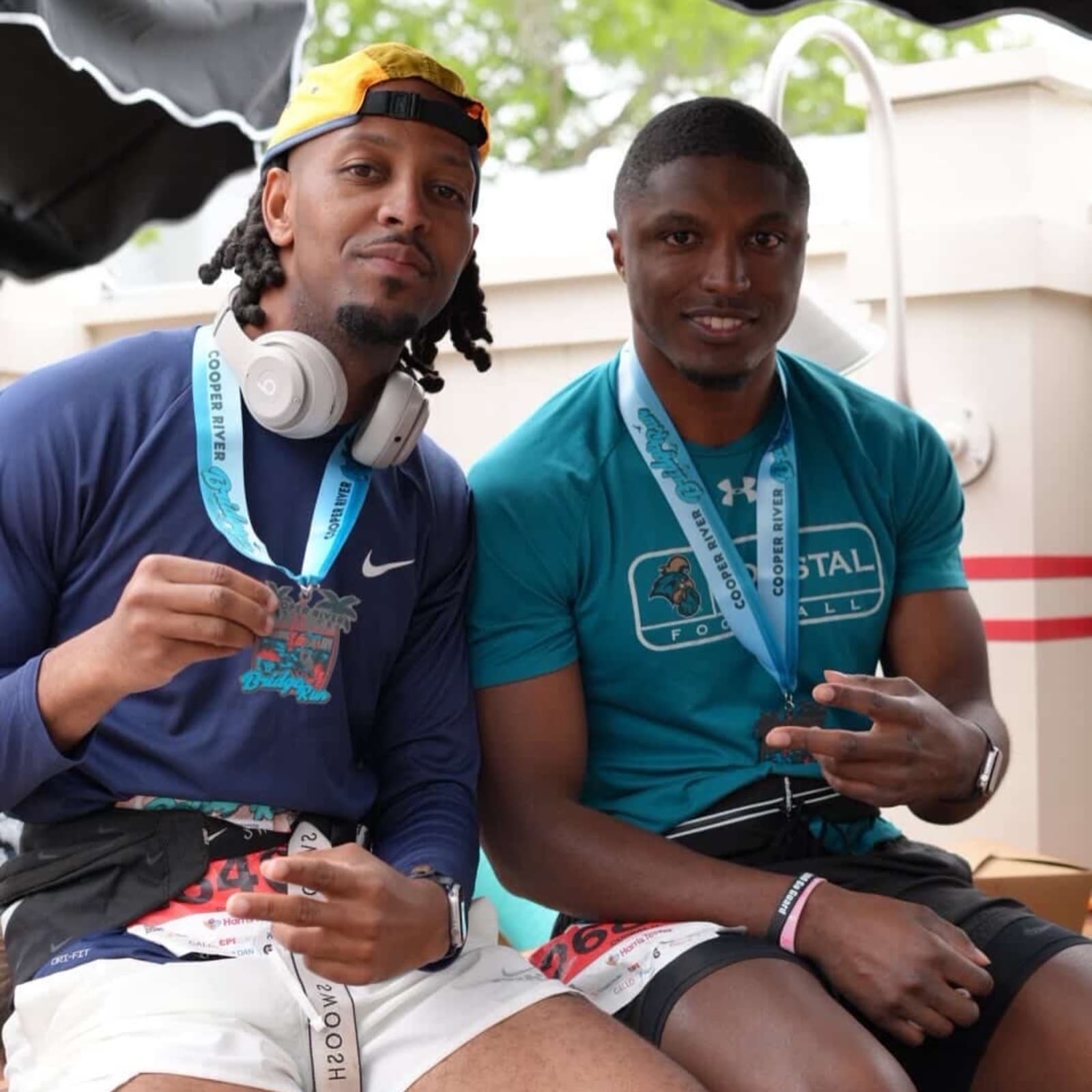
Every spring, tens of thousands of runners line up in Mount Pleasant and finish on Meeting Street in downtown Charleston. The Cooper River Bridge Run is a 10K that climbs and descends the Arthur Ravenel Jr. Bridge, and it's routinely counted among the largest timed 10Ks in the country — which makes it, by a wide margin, Charleston's biggest running event. If you've signed up, or you're thinking about it, here's how I coach clients through it.
Why the Bridge Changes Everything
Most 10Ks are flat. This one isn't. The Ravenel Bridge climb sits in the first half of the course, which means you hit real elevation gain before your legs have settled into a rhythm — and then you have to control your pace on the way down without letting gravity wreck your knees. Training on flat ground alone will leave you underprepared for both. If you have access to any kind of incline — a bridge, a parking garage ramp, even a treadmill set to 4–6% — that's where race-specific fitness actually gets built.
An 8-Week Framework
- Weeks 1–2 (Base): 3 easy runs per week at a conversational pace, building total weekly mileage gradually. Add one weighted incline walk or stair session.
- Weeks 3–5 (Build): Introduce one interval session per week (e.g. 6–8 x 400m at a hard-but-controlled effort) and one hill-repeat session. Keep the third run easy.
- Weeks 6–7 (Peak): Longest training run of the block, plus a race-pace tempo run that includes at least one simulated incline. This is where bridge-specific pacing gets rehearsed.
- Week 8 (Taper): Cut volume by roughly 40–50%, keep intensity short and sharp, prioritize sleep and hydration. Your legs should feel restless by race day — that's the point.
Don't Skip the Strength Work
The two muscle groups that take the most abuse on the bridge are your calves (the climb) and your quads (the descent, absorbing impact). Two short strength sessions a week — calf raises, step-ups, split squats, and core work — do more to bridge-proof your legs than extra easy miles ever will. This is exactly the kind of programming we build into BBB's online coaching and in-person sessions leading into race season.
Race Week
- Cut training volume significantly — your fitness is already built, this week is about arriving fresh.
- Don't try anything new on race day: same shoes, same breakfast, same warmup you've used in training.
- Walk or jog the start corral early — the Bridge Run's field is enormous, and getting boxed in at the gun will throw off your pacing plan.
- Hold back on the climb. The bridge rewards patience — plenty of runners blow up on the descent because they spent too much on the way up.
Train With People, Not Just a Plan
Brad founded Let's Run Charleston (also known as the Cooldown Run Club) for exactly this reason — training alone gets hard to stick with, especially once the interval sessions start. It's a weekly, all-paces community run through Charleston, and it's a low-pressure way to log miles alongside people training for the same race. Check the events calendar for the next group run, or if you want a structured plan built around your current fitness and your race date, that's exactly what BBB's online coaching and 1-on-1 training are built for.